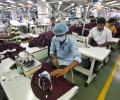
'A change we have seen after the Russia-Ukraine war is the energy crisis in Europe.' 'Earlier, in Europe, people used to change their clothes after 5 washes, now they are using it till 15-20 washes.' 'They used to change their entire wardrobe after 2 months or so, but because of the economic conditions, it has changed.' 'It has affected exports as 40% of our exports is to Europe, 30% to the US and 10% to the UK.' 'The war has to end for better days to come.'
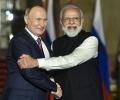
Prime Minister Narendra Modi spoke with Russian President Vladimir Putin on Friday during which he reiterated India's long-standing position on the Ukraine situation, favouring dialogue and diplomacy.


India's top oil and gas producer ONGC on Friday reported a tripling of net profit in the June quarter as it earned record prices before the government slapped a tax on windfall profits arising from a global rally in energy rates. Oil and Natural Gas Corporation's (ONGC) standalone net profit at Rs 15,205.85 crore, or Rs 12.09 per share, in April-June, compared to Rs 4,334.75 crore, or Rs 3.45 a share, in the same period a year back, according to a stock exchange filing by the company. Sequentially, the profit was higher than the Rs 8,859.54 crore net profit of January-March.

Reserve Bank and the finance ministry on Wednesday asked top management of banks and representative of trade bodies to push exports and import transactions in rupee. It was stressed during a meeting that banks should connect with their foreign counterparts for opening special rupee vastro accounts to facilitate cross-border trade in Indian currency rather than popular mode dollar, sources said. Trade associations and their foreign trading partners should explore opportunities to make use of the framework, sources added.

The government believes firms which are subject to China's laws could be forced to hand over information to Beijing's security services.

A quick bounce back of the Chinese stocks looks improbable now.
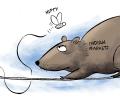
Very often, 'sentiment' drives prices well beyond what is warranted and it is hard to forecast market sentiment, explains Debashis Basu.

The Reserve Bank of India (RBI) has given its approval to two Russian banks for opening special vostro account for rupee trade. Sberbank, JSC VTB - the largest and second largest bank of Russia - are the first foreign lenders to receive this approval after the central bank announced the norms on INR trade in July. Both lenders have branch presence in India. Earlier this month, state-run UCO Bank received the RBI's approval to open a special Vostro account with Gazprombank of Russia. While the Kolkata-based lender is in the process of opening the account, the bank has received requests from various foreign lenders for opening such an account.

They are both electronic manufacturing services (EMS) companies, also known as contract manufacturers. One is Taiwan's Foxconn group, the undisputed global number one in this business with revenues of $223 billion. The other is Dixon Technologies, the biggest domestic player with revenues of over Rs 10,500 crore.

Iran has offered to help India meet its energy needs by relaunching rupee-rial trade for export of oil and gas, said Iranian ambassador to India Ali Chegeni. Chegeni said if both the countries resume rupee-rial trade, bilateral trade can touch $30 billion. Iran used to be India's second largest oil supplier but New Delhi had to halt imports after the former US president Donald Trump withdrew from the nuclear deal with Iran and re-imposed sanctions on its oil exports.

India's manufacturing sector activities moderated in March with companies reporting softer expansions in new orders and production as inflation concerns dampened business confidence, a monthly survey said on Monday. The seasonally-adjusted S&P Global India Manufacturing Purchasing Managers' Index (PMI) was at 54.0 in March, down from 54.9 in February, highlighting weakest rate of growth in terms of production and sales since September 2021. The March PMI data pointed to an improvement in overall operating conditions for the ninth straight month.

'Building a whole product with the railways was challenging; we had to figure out how to load and unload a train when it stops for only about five minutes at a station.' 'We also helped them understand the revenues this would generate for them.'
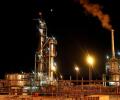
Russia on Thursday said it was not bothered at a possible price cap on its crude oil proposed by the West, saying Moscow will negotiate directly with its partners like India and China as the price should be decided between the producers and consumers, and "not someone who just decided to punish someone." Members of the G7 have agreed to impose a price cap on Russian oil in a bid to hit Moscow's ability to finance the war in Ukraine. Countries want to reach an agreement ahead of December 5, when Europe's embargo on Russian crude travelling by sea takes effect.

Tata Motors is looking at various measures, including direct buying from stockists and making changes in the product configurations, to offset the impact of semiconductor shortage on its production activities and sales, a top company official has said. The auto major, which sells models including Nexon, Harrier and Safari in the domestic market, is also looking at different kinds of chips which could be used in components where the supply situation is severe. The automaker expects the situation to remain challenging in the ongoing quarter and some improvement in supplies only in the second half of the fiscal.

Tata Motor's owned Jaguar Land Rover (JLR) on Tuesday reported a 68 per cent increase in retail sales for the first quarter ended June 30 at 124,537 units as compared with the same period of the previous fiscal, reflecting the continuing recovery in demand from the COVID 19 pandemic. The company had retailed 74,067 units in the April-June quarter of 2020-21. However, wholesales, in particular, were lower than demand would have permitted due to semiconductor supply issues affecting the global auto industry, JLR noted in a statement.

India may see a structural shift in supplies of crude oil with Russia emerging as a key source of fuels, a development that reduces New Delhi's dependence on West Asian oil, gives Indian refiners better bargaining power with price-setter Saudi Arabia, and improves overall energy security. The unexpected surge in supplies of Russian crude in the last few months, unthinkable until the war in Ukraine, may also deliver other unforeseen gains such as boosting exports of refined fuels to Europe, which historically has counted on Russian shipments. India has jumped on to the bandwagon of opportunistic buying of Russian crude but if calibrated carefully, Urals crude can be a long-term asset for India refiners.

Is self-reliance the right approach in a mega-buck game, or better to be part of a network? asks T N Ninan.

Whether this remains under control in the coming months will depend on the future intensity and spread of the Russia-Ukraine war, and the effectiveness of the Indian government's response, points out A K Bhattacharya.

Reliance Industries chairman Mukesh Ambani might have made news for purchasing the most expensive beach-side villa in Dubai recently, but he is not the only Indian eyeing the city for investment. Since Dubai allowed foreign investors full ownership in specific sectors in June 2021, a horde of Indian companies have moved or expanded into the desert city. The list even includes a kindergarten, an elementary and middle school, and a hotel that has sought 100 per cent ownership.

The Apple iPhone comprises 44 per cent of the global smartphone market's revenues and it is the second most-such device to be shipped after Samsung. More than half of smartphones used in the US are iPhones. More than 7 million iPhones are expected to be sold in India in 2022, extending the user base to 20 million, according to market research and analyst firm Techarc. Hence, the news about Apple scaling down its production target for iPhone 14 in India has made news.
Finance Minister Nirmala Sitharaman on Tuesday said many countries have evinced interest for bilateral trade in the rupee after the RBI announced a mechanism recently. Speaking at Mindmine Summit 2022, she said this along with other steps taken by the government is towards full capital account convertibility. "It isn't the rouble-rupee which was in the old format. "Now this (bilateral rupee trade) formulation, which I am glad the RBI has come up at a time which was so critical," she said when asked if India is ready for capital account convertibility.

India's wheat exports could touch a new record of 10 million tonnes in 2022-23, up from a record seven million tonnes in the current financial year, if global market conditions remain choppy and no curbs are imposed on outbound shipments. That is the bullish estimate by officials from global trading firms and market watchers who say the Russia-Ukraine crisis has not only attracted global buyers to India but also pushed the price of Indian wheat from around $320 per tonne (FOB) to over $360 per tonne in less than 10 days. Food secretary Sudhanshu Pandey told reporters that wheat exports till February-end have already reached 6.6 million tonnes and by the end of March, outbound shipments will reach seven million tonnes.

Indian Oil Corporation (IOC), the nation's top oil firm, has bought as much as 3 million barrels of crude oil that Russia had offered at steep discount to prevailing international rates, sources said. The purchase, made through a trader, is the first since Russia's February 24 invasion of Ukraine that brought international pressure for isolating Putin administration. Sources aware of the matter said IOC bought Urals crude for May delivery at a discount of $20-25 a barrel to dated Brent.

The institutional portion was subscribed 143 times, the wealthy investor portion by 360 times and the retail investor portion by 24.5 times.
Modi has made nuclear power a key element of his clean energy strategy

Even as India's passenger-vehicle sales touched a record high of 3.9 million units in 2022-23, growing 27 per cent over the previous financial year, the country's largest carmaker, Maruti Suzuki India (MSIL), said on Monday uncertainties in the electronic-component supplies might affect production in FY24. MSIL said the shortage of electronic components had some impact on production in FY23. "The company took all possible measures to minimise the impact.

With domestic retail fuel prices jumping to record high on rising international oil rates, India on Thursday pressed oil cartel OPEC for 'affordable' oil price within a 'reasonable band' and that the producers should phase out production cuts. OPEC nations such as Saudi Arabia have traditionally been India's principal oil source. But, OPEC and its allies, called OPEC+, ignoring its call for ease supply curbs had led to the world's third-biggest oil importer tap newer sources to diversify its crude oil imports. As a result, OPEC's share in India's oil imports has dropped to about 60 per cent in May from 74 per cent in the previous month.

'You have to be a total anti-national bozo to shut down the Nokia plant in Sriperumbudur, which was the first large manufacturing plant for mobile phones in India.' 'Why was the unit shut down? Because of somebody's ego.'

Apart from bringing new suppliers on board, Xiaomi is also hoping to take advantage of the newly launched PLI scheme that offers incentives on incremental production of smartphones with 2020 as the base year.

Ola Electric will roll out its complete offering of electric scooters and motorcycles in each segment of the market - premium, mass premium, and economical - in the next 12 months in a bid to push for a near-full conversion of the two-wheeler market to electric in three years. According to Bhavish Aggarwal, founder and CEO of Ola Electric, "ICE (internal combustion engine) products will fall off a cliff." He also says the company is aiming to become profitable next year.
On the back of rising crude oil purchases, India's bill for imports from sanctions-hit Russia jumped 3.5 times in a year in April to $2.3 billion, showed data from the commerce ministry. In April, India's crude oil imports from Russia were valued at $1.3 billion, 57 per cent of India's total inbound shipments from Russia. Other major imported items during the month included coal, soybean and sunflower oil, fertilisers, and non-industrial diamonds. That month, Russia was also the fourth-largest crude petroleum supplier to India, after Iraq, Saudi Arabia, and the United Arab Emirates (UAE).

Puri said the government has a moral duty to provide energy at affordable rates to consumers.

Russia has welcomed India's decision to not support the price cap on Russian oil announced by G7 and its allies and offered it cooperation on leasing and building large-capacity ships to overcome the ban on insurance services and tanker chartering in the European Union and Britain to continue buying discounted oil. The offer came as Russian Deputy Prime Minister Alexander Novak held a meeting with the Indian Ambassador to Moscow, Pavan Kapoor, on Friday. "The Deputy Prime Minister welcomed India's decision not to support the price cap on Russian oil, which was imposed on December 5 by the G7 countries and their allies," the Russian foreign ministry said in a statement.

India will need to travel back in time and seek inspiration from football greats Tulsidas Balaram and Chuni Goswami to deftly dribble around and sidestep the West-imposed price cap on exports of Russian seaborne crude oil. India depends on imported oil to meet 86 per cent of its needs, of which nearly a quarter now comes from Russia. The copious flows are roughly 10 per cent cheaper than competing suppliers helping India save billions of dollars in fuel costs.

India on Wednesday asserted that its energy purchases from Russia remain 'minuscule' in comparison to its total consumption and that legitimate energy transactions cannot be politicised as energy export from Russia are yet to be sanctioned. The world's third-biggest oil-consuming and importing nation has in recent weeks snapped few cargoes available from Russia at deep discounts as part of its plans to diversify its import basket. These purchases have been commented upon.

The Russian-Ukraine war can hit the global supply chains that are already constrained due to the pandemic and the worst impact will be on ongoing chip shortage because the warring nations brutally control supplies of key raw materials that go into making semiconductors, warns a report. Since Russia controls as much as 44 per cent of global palladium suppplies, Ukraine produces a significant 70 per cent of the global supply of neon -- the two key raw materials that go into making chips. The markets can expect the global chip shortage, that began with the pandemic, to worsen if the military conflict lingers on, says a Moody's Analytics report on Friday.

International oil prices retreated from an over seven-year high but was still above $100 a barrel and continue to pose threat to India's inflation rate and current account deficit. While there are no supply concerns as the oil route remained open, consumers will feel the pinch when PSU oil firms start passing on the increase in international rates through a revision in petrol and diesel prices, which have been on a pause for over three-and-a-half-months in view of elections in Uttar Pradesh and four other states. The government is "closely monitoring the situation" and will "take appropriate steps as and when required", a top official said. Brent crude oil surged past $105 per barrel on Thursday for the first time since August 2014, following Russia's invasion of Ukraine.
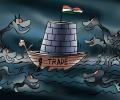
Countries negotiating free trade agreements (FTAs) need to keep in mind eight "myths" which surround these pacts, like they lead to accelerated increase in exports and promote domestic manufacturing, according to a report by think-tank GTRI. The report by Global Trade Research Initiative (GTRI) claims to dispel these 'myths', including that FTAs weaken the WTO (World Trade Organisation), countries are rushing to do FTAs, and these pacts promote investment and lower prices. It is "erroneously" believed that most world trade happens through the FTA route, but in reality, it is less than 20 per cent, said the report titled 'FTAs: Fabulous, Futile, or Flawed?'.

At a time when Apple delivered its flagship line of new products on schedule despite battling a year of supply-chain turmoil, India could account for at least 12 per cent of the free-on-board (FoB) value of Apple Inc's iPhones manufactured by its vendors globally by 2025-26 (FY26). The number represents a significant shift for the Cupertino-based company's over-dependence on China, where 95 per cent of its phones are still being made. India's growing importance can be seen from the fact that in 2021-22 (FY22) - the first year of the production-linked incentive (PLI) scheme (the scheme was extended by a year due to the pandemic) - the FoB value of iPhones made in the country was $1.75 billion, translating into less than 2 per cent of the global value.
